Summary
A global manufacturing organization has committed to enhanced customer experience by improving on-time delivery stemming from siloed plants, inconsistent processes, and limited visibility into production planning process. With a low level of maturity in Business Process Management (BPM), the organization adopted Scheer’s BPM methodology and quickly discovered opportunities for greater efficiency, shorter cycle times, and process standardization.
This case study demonstrates how process mining, modeling, and simulation – anchored in Scheer’s BPM approach – transformed operational disorder into agile excellence, significantly raising customer satisfaction through improved on-time delivery. By leveraging real-world data to uncover bottlenecks in areas like MRP and capacity planning, the initiative delivered substantial results. We also defined BPM roles within the organization and established Process of Process Management for governance of process policies as well as standards and guidelines that should be followed for all BPM initiatives.
Organization Background
The organization is a manufacturer of electronic, electrical, and fiber optic connectivity systems and produces over 100,000 products for a variety of industries, including data communications, medical, industrial, automotive and consumer electronics. The company is highly internationalized with over 50 plants in different countries. The structure of the company was asynchronously run by the plants with no standardization across the organization. They are now shifting to a “one-company” solution so that processes, manufacturing, and product lines are harmonized resulting in increased agility, efficiency, and on-time delivery to customers. They currently have a small team to monitor processes, but no real BPM organization set up for continuous process improvement.
Business Challenge
Customer satisfaction was identified as a key area for improvement due to frequent late deliveries. In addition, shifting global economic conditions demanded greater agility within the supply chain. Because each plant operated with its own unique production planning processes, it was challenging to relocate production lines and maintain consistency, which contributed to delivery delays. The lack of process transparency made it difficult to determine where to begin improvement efforts. To address these challenges, the organization leveraged process modeling and mining to uncover hidden inefficiencies, design standardized workflows, and enable real-time monitoring for proactive issue resolution.
Solution
To drive enterprise-wide transformation, the team selected one pilot plant as a blueprint and implemented Scheer’s BPM framework with SAP Signavio. This approach integrated As-Is process modeling, pain point analysis, To-Be process design, simulation, and ongoing process mining. By collaborating with subject matter experts and leveraging real process data, the team identified bottlenecks, redundancies, and error-prone steps, then redesigned and validated standardized workflows. Real-time monitoring and new BPM governance roles ensured continuous improvement and scalability across all plants.
Results
The project yielded remarkable, quantifiable impacts, redefining production planning processes:
- Enhanced Visibility and Standardization: Complete transparency into production planning at the pilot plant, forming a blueprint for all 50+ sites, enabling agile line shifts and consistent operations.
- Cycle Time Improvements: 14% reduction end-to-end, with 25% in capacity planning—achieved via bottleneck resolutions and loop eliminations.
- Operational Efficiencies: Removed non-value-added redundancies, such as goods receipt loops and issue repetitions, optimizing resource allocation.
- Rework and Error Reductions: Mining insights drove 50% fewer reworks and rejections , minimizing disruptions and costs through proactive validations.
- Scalable BPM Foundation: New roles and teams positioned the organization for expansion—boosting productivity, cash flow, and competitiveness.
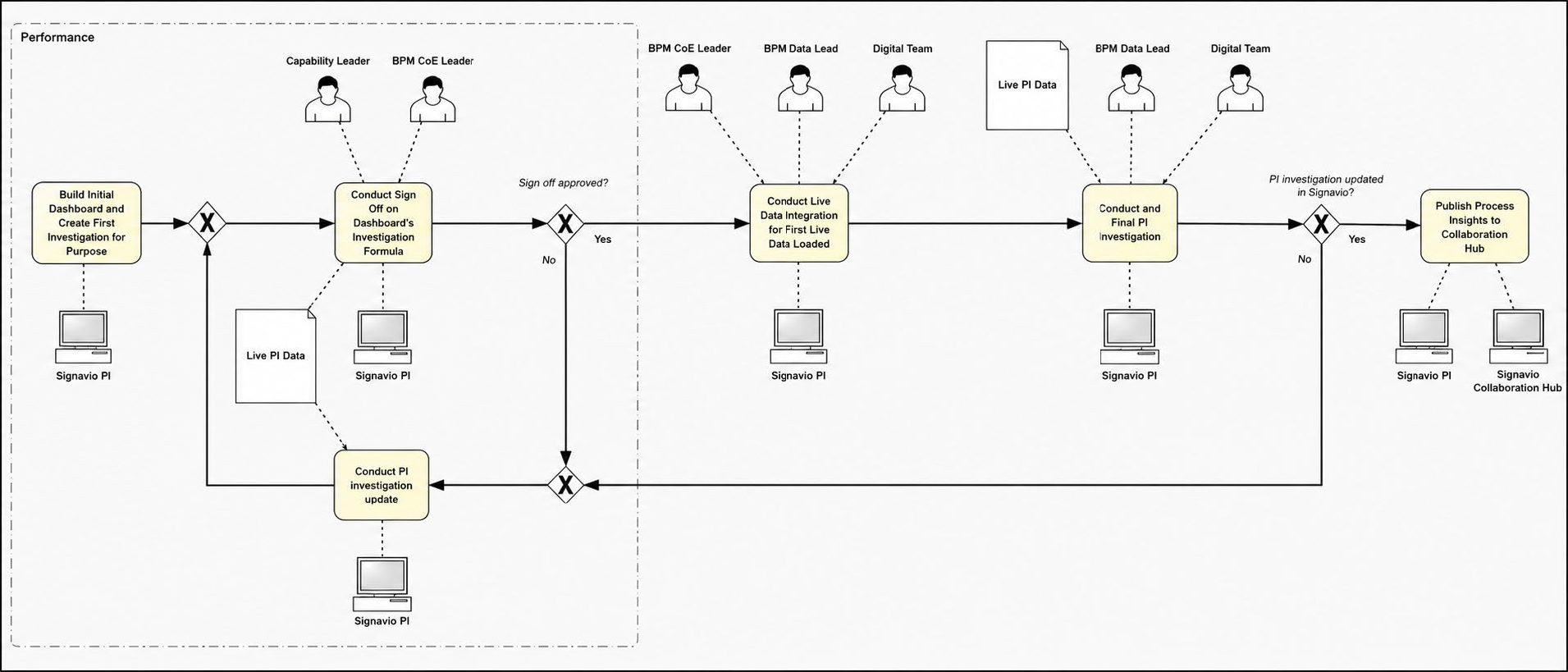
Fig. 1 Excerpt of “Conduct Process Mining” Process – a subprocess of the Process of Process Management
